
Accurate keratometry remains foundational to modern ophthalmic practice. Whether supporting toric and multifocal IOL power calculations, rigid gas-permeable or orthokeratology contact lens fitting, refractive surgery screening, or longitudinal monitoring of corneal ectasia, the quality and reliability of central corneal curvature data directly influence clinical outcomes and medico-legal risk. For practice owners, clinical directors, biomedical engineers, and procurement specialists, the decision is no longer simply “manual versus auto.” It encompasses measurement principle, repeatability under real-world conditions, data interoperability, total cost of ownership, service infrastructure, and regulatory positioning.
Classical Javal-Schiötz and Bausch & Lomb-style manual keratometers measure the anterior corneal surface by reflection of mires and remain valued in many high-volume surgical centers for their independence from automated algorithms and for certain high-stakes toric calculations. Automated keratometers and auto-refractor/keratometers (ARKs) dominate routine clinical workflows because they reduce operator dependence, accelerate pre-test lanes, and frequently incorporate additional parameters (pupillometry, corneal diameter, retro-illumination imaging). Modern ARKs typically use either rotary-prism, mire-ring, or super-luminescent-diode (SLD) illumination combined with high-sensitivity detectors. Peripheral or multi-zone keratometry is increasingly available and relevant when assessing irregular astigmatism or planning premium IOL placement.
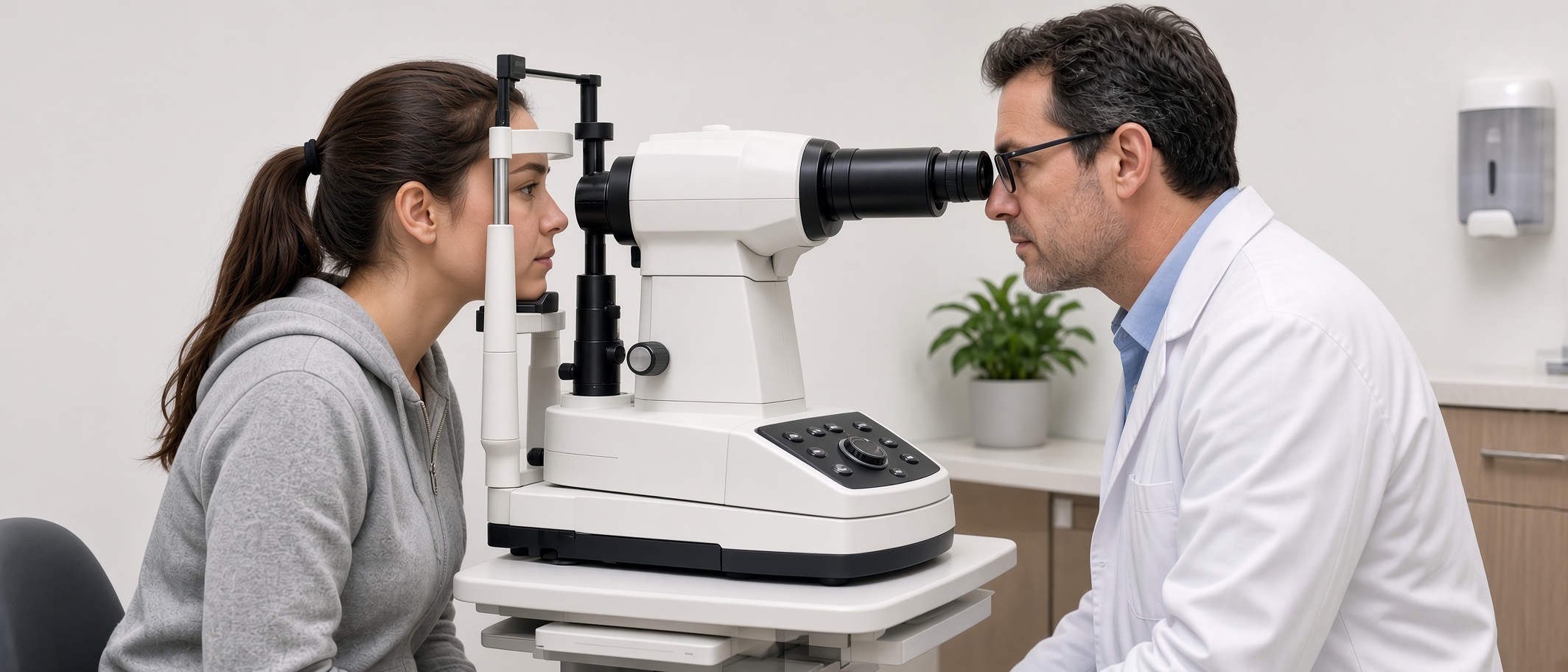
When evaluating instruments for multi-site groups, ambulatory surgery centers, or high-throughput clinics, decision-makers consistently prioritize the following:
The professional keratometer and ARK segment remains concentrated among established Japanese, German, American, and Korean manufacturers. Pure manual instruments continue to be produced and serviced primarily by European specialists for niche surgical applications. The dominant volume, however, resides in combined ARK devices that feed objective refraction and keratometry into digital refraction systems or EMR platforms. Below is a comparative overview of representative platforms currently specified by clinics and hospital systems, listed alphabetically by manufacturer.
Capital cost is only one component of total ownership. Service contracts, calibration frequency, software update policies, and the availability of multi-device networking significantly affect long-term economics. Devices that export standardized data reduce transcription error and support quality-assurance programs. In multi-site organizations, consistency of measurement principle across locations is often prioritized over incremental feature differences. For surgical centers performing premium IOL work, many still maintain at least one calibrated manual keratometer as a reference standard alongside automated systems.
Emerging trends include tighter integration with optical biometers and swept-source OCT platforms, AI-assisted quality flags for measurement reliability, and handheld or portable units for outreach and pediatric screening. While pure keratometry remains essential, the boundary between dedicated keratometers, ARKs, and multi-function diagnostic stations continues to blur. Decision-makers should therefore evaluate not only current measurement performance but also the instrument’s place within the broader diagnostic and data ecosystem of the practice.
Last Update: August 2026